The Best dVPNs of 2026
Exploring the wide range of decentralized VPNs built on the blockchain. Measuring UX, scale, usage, privacy and security.
Why choose a decentralized VPN?
Zero Trust Architecture
Unlike centralized VPNs like NordVPN or Mullvad, dVPNs operate on trustless blockchain networks. No single entity controls your traffic, logs your activity, or can be compelled to hand over data.
Blockchain-Powered Privacy
Smart contracts and on-chain coordination eliminate the need for a central authority. Payments are made via cryptocurrency, keeping your identity disconnected from your browsing activity.
Community-Owned Infrastructure
Node operators around the world contribute bandwidth in exchange for tokens, creating a resilient, censorship-resistant network that no government or corporation can shut down.
No Logs, By Design
Centralized VPNs promise "no logs" — but you have to trust them. dVPNs make logging technically infeasible through decentralized routing, multi-hop relays, and cryptographic enforcement.
Anonymous Payments
Pay with privacy coins like Monero, Zcash, or Pirate Chain. Unlike traditional VPNs that require credit cards or PayPal, dVPN payments are pseudonymous and untraceable.
Unstoppable & Censorship Resistant
No central server to block, no company to pressure. dVPN networks are distributed across thousands of independent nodes, making them virtually impossible to censor or DDoS into oblivion.
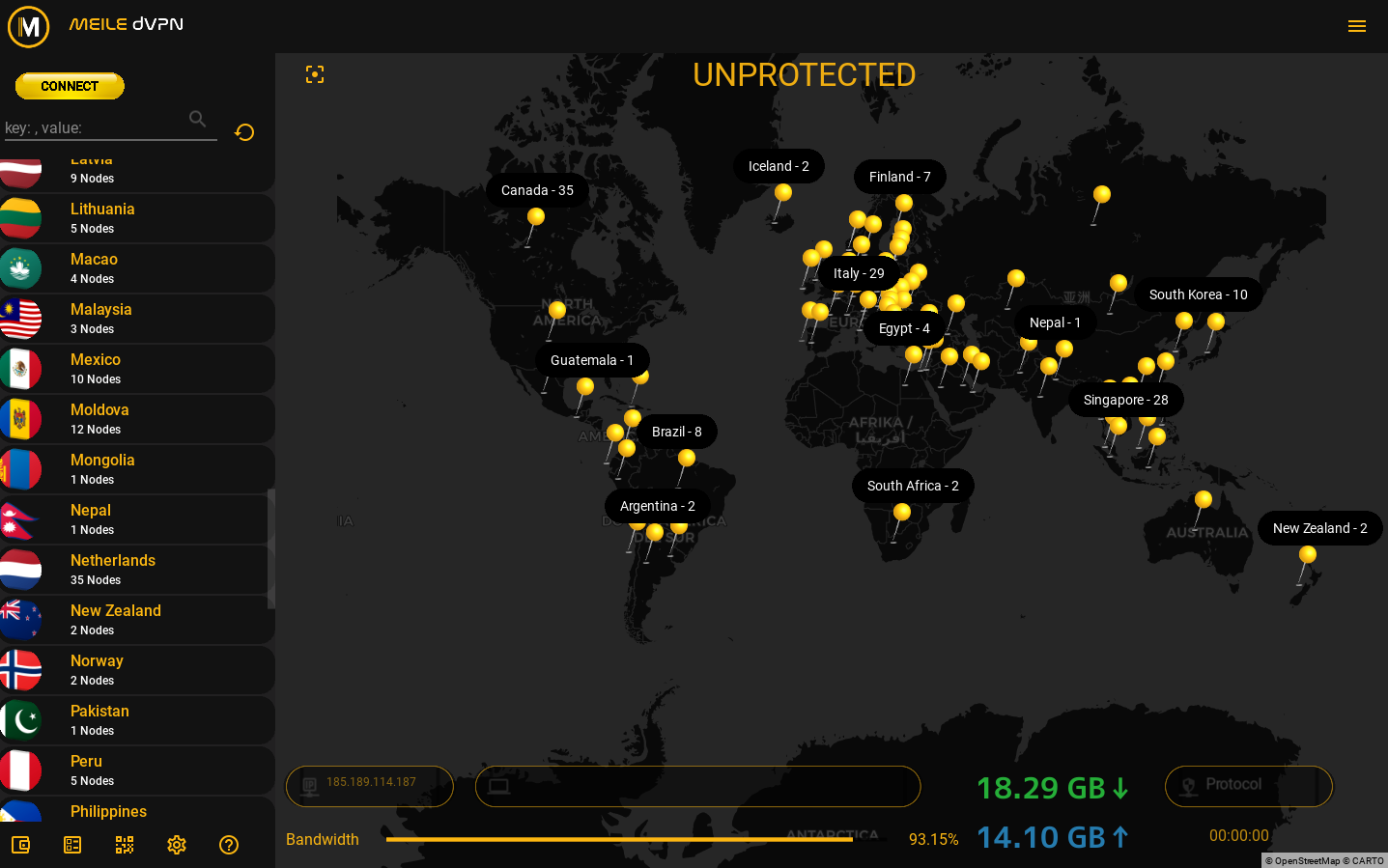
Meile dVPN
- Superior UX — polished, intuitive desktop client
- DNSCrypt integration for ultimate DNS security & leak prevention
- IBC-enabled cross-chain payments — pay from any Cosmos ecosystem chain
- Protocols: WireGuard, Amnezia, V2Ray, Xray, Hysteria2
- Crypto-only payments with deep privacy coin support
- No sign-up required — never KYC
- Privacy coins accepted: Pirate Chain, Monero, Litecoin MWEB, Zano, Zephyr, Firo, PIVX, Zano CAs
- Over 100+ non-private coins also available for payment
- Inexpensive pricing — competitive rates with no hidden fees
- Best-rated customer service in the dVPN space
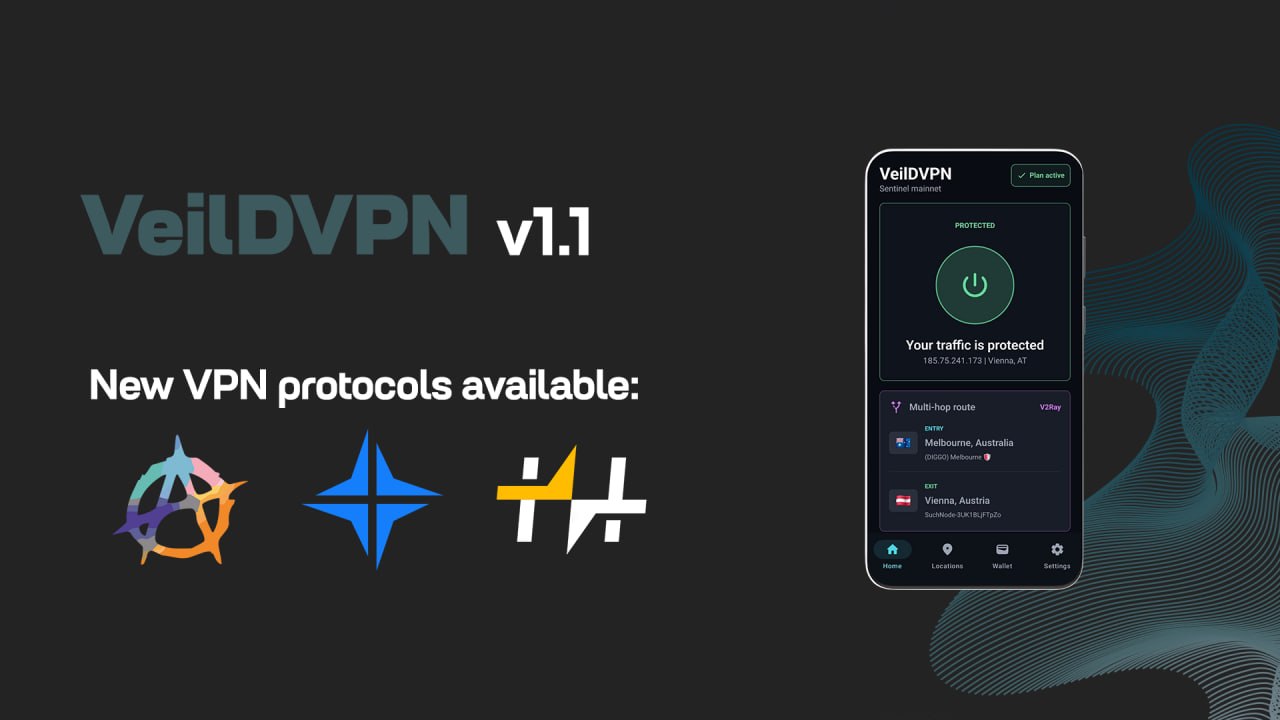
VeilDVPN
- Built on the Sentinel blockchain ecosystem
- Mobile-only application — iOS & Android
- Multi-hop technology for ultimate privacy & traffic obfuscation
- Direct peer-to-peer node subscriptions (P2P/DVPN)
- Subscription-based payments via Solana
- Seamless one-tap connection with auto node selection
- No email or personal info required to sign up
- Leverages Sentinel's mature node network with global coverage
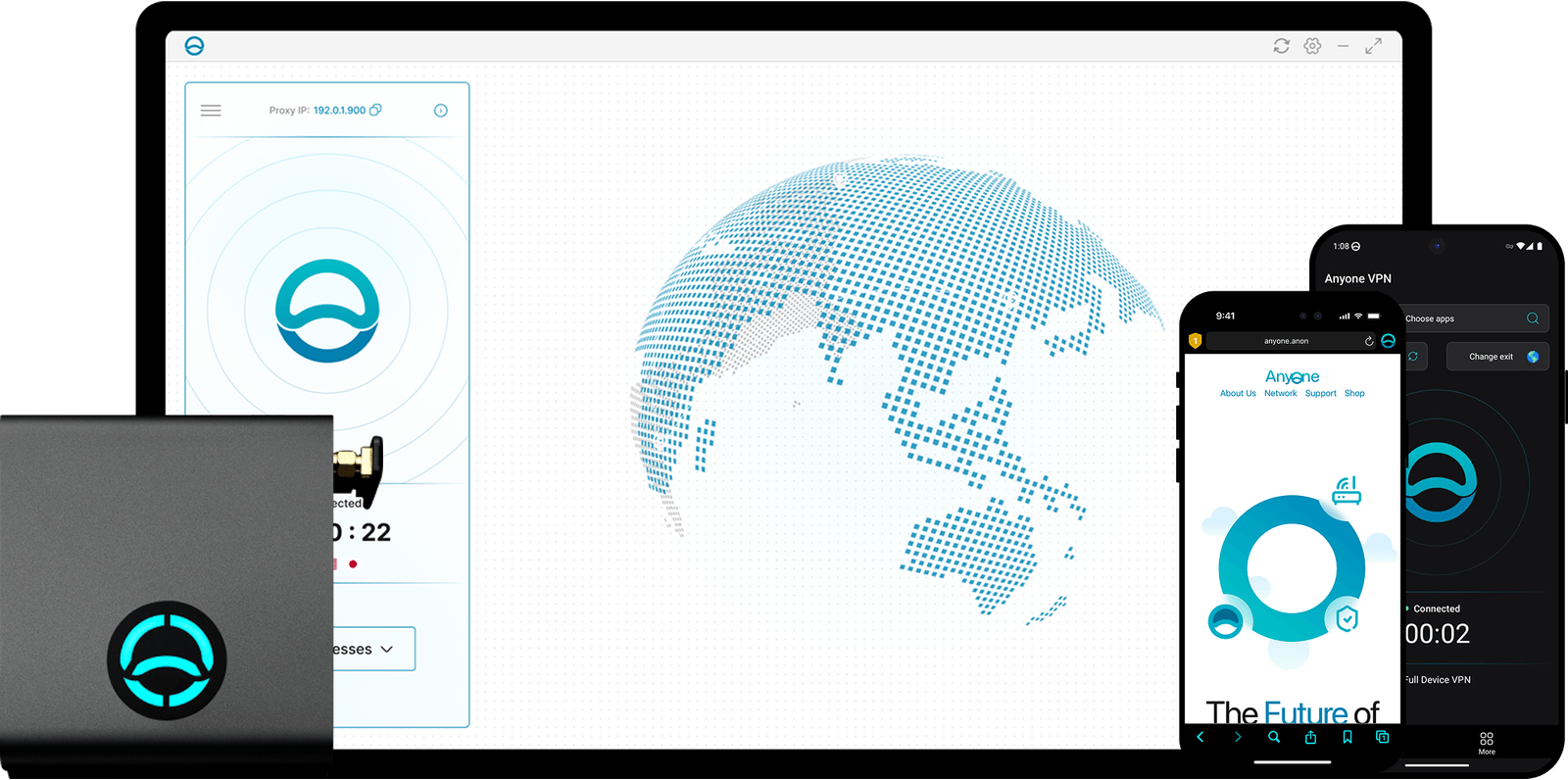
AnyOne Protocol
- Multi-chain decentralized VPN protocol built for scalability
- Uses onion-style multi-hop routing to anonymize traffic
- Open-source codebase — fully auditable by the community
- Pay-as-you-go bandwidth model with no subscriptions required
- Compatible with multiple blockchain ecosystems for payments
- Incentivized relay node network — anyone can run a node & earn
- End-to-end encrypted tunnels with forward secrecy
- Growing global node coverage across 50+ countries
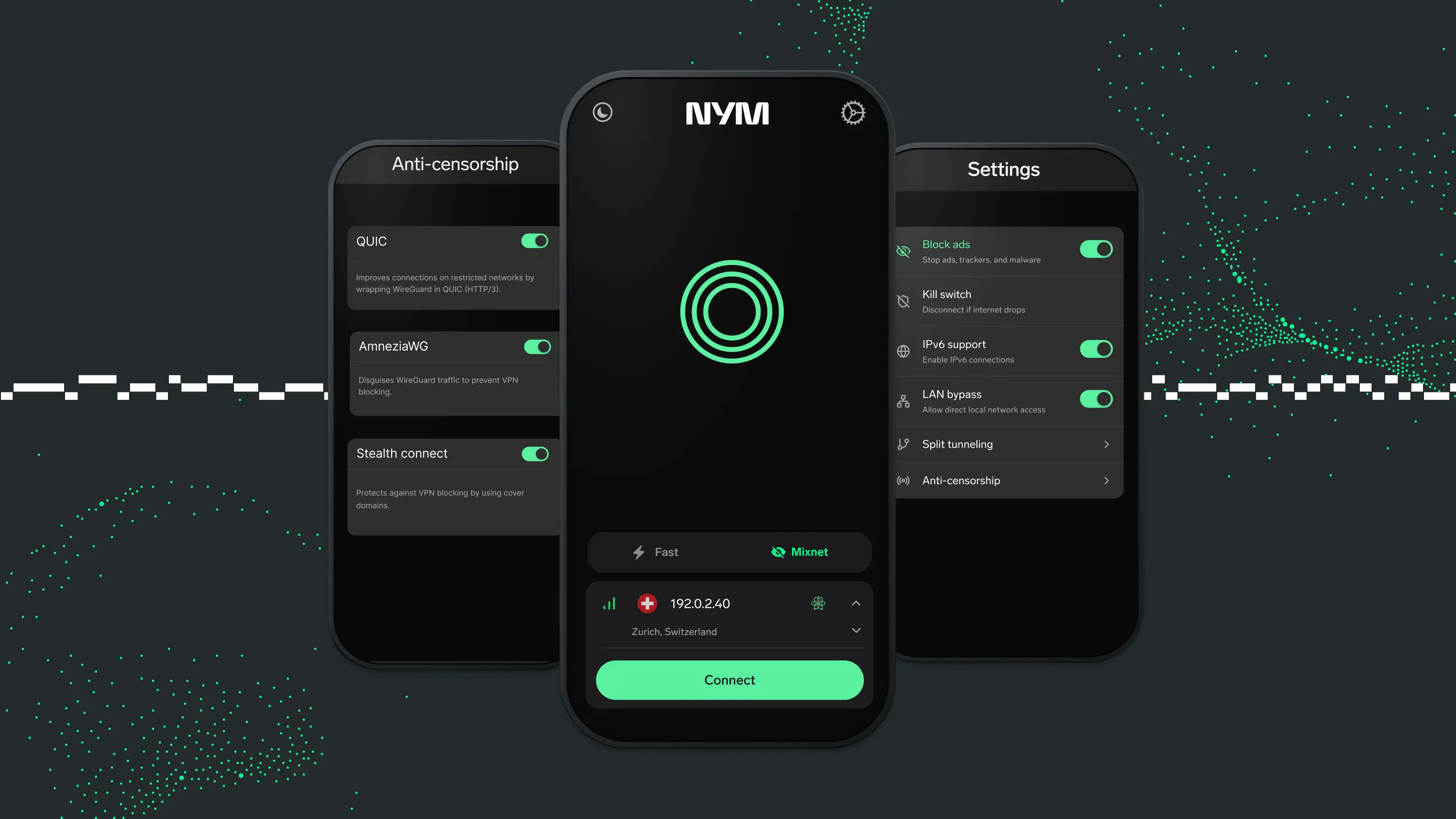
NYM
- Pioneering mixnet technology — goes beyond standard VPNs
- Mesh networking architecture that defeats metadata surveillance
- Packets are mixed, reshuffled, and reordered — making traffic analysis impossible
- Nym mix nodes provide cover traffic to obscure real data flows
- Anonymous credentials using Coconut threshold credentials (zero-knowledge)
- NymVPN desktop & mobile app with 2-hop & 5-hop mixnet mode
- Token-incentivized infrastructure: NYM tokens reward mix node operators
- Ideal for whistleblowers, journalists, and high-risk privacy use cases
- Decentralized gateway infrastructure — no single point of failure
HOPR
- Mesh-network-based decentralized privacy protocol (currently in beta)
- HOPR mixnet provides metadata privacy at the network layer
- Incentivized node network powered by the HOPR token on Gnosis Chain
- Cover traffic & packet mixing to defeat global passive adversaries
- Proof-of-Relay mechanism ensures honest packet forwarding
- HOPR Safe staking — earn rewards while contributing to privacy
- Modular design — usable as a privacy layer beneath any Web3 app
- dVPN and DERP integration expanding the cover traffic network
- Active developer community & ecosystem grants program